
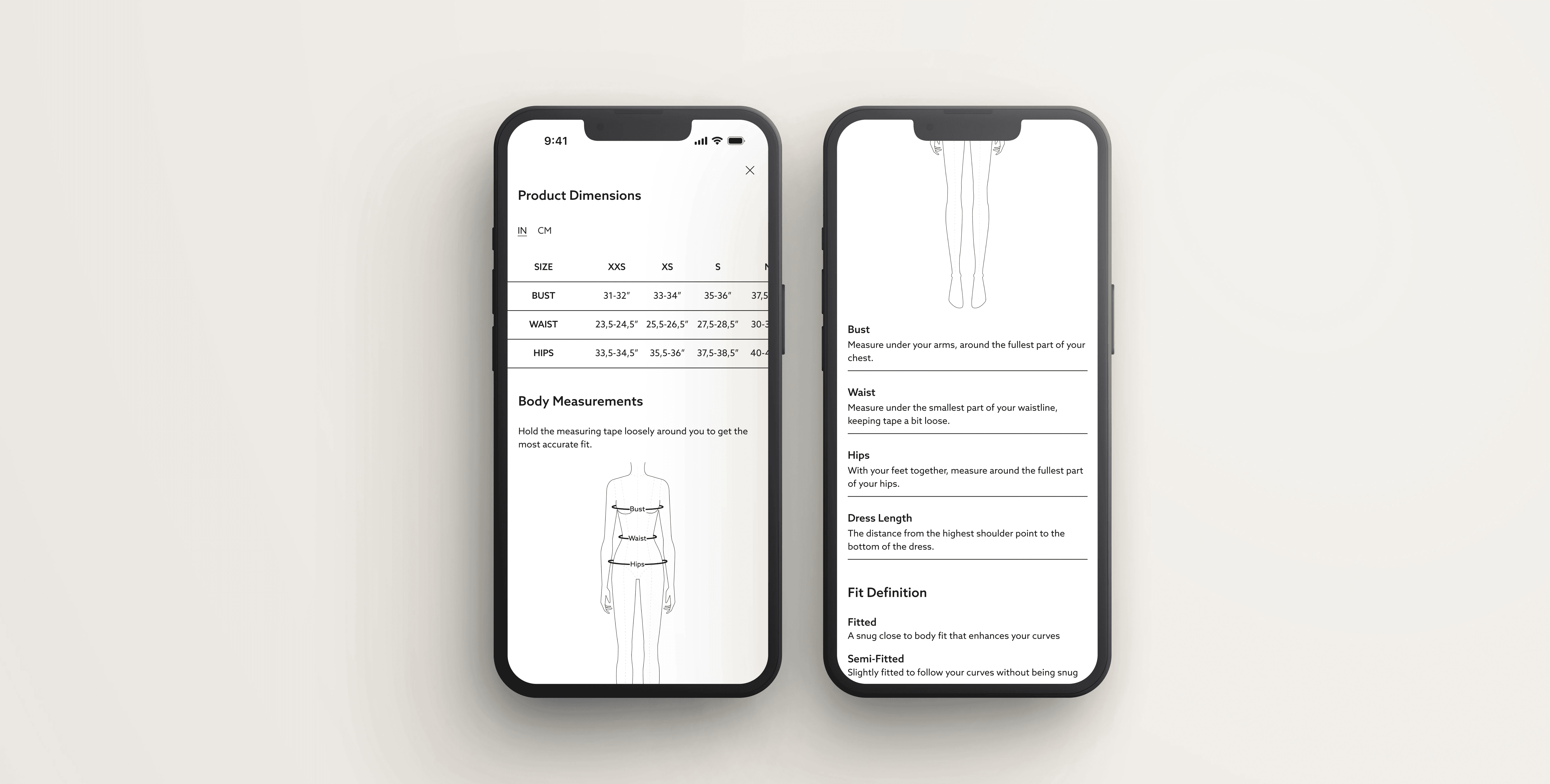
Company: Groupe Dynamite
Role: Jr. Product Designer, responsible for end-to-end user experience and interface design.
Duration: April 2025- May 2025
Tools: Figma
Team Members: Product Manager
Customers relied on the size chart to make purchase decisions, but the existing experience exposed them to excessive and often irrelevant information. The goal was to simplify size selection and help customers find the right fit with greater confidence.
Problem
Sizing is a key factor in purchase confidence, yet the existing experience required customers to sift through irrelevant information before finding the measurements they needed. This added unnecessary friction to the buying journey and increased uncertainty during size selection.
Strategy
To reduce cognitive load and improve purchase confidence, I focused on three key principles:
Prioritize product-specific information
Simplify the information hierarchy
Provide sizing guidance at the moment of decision
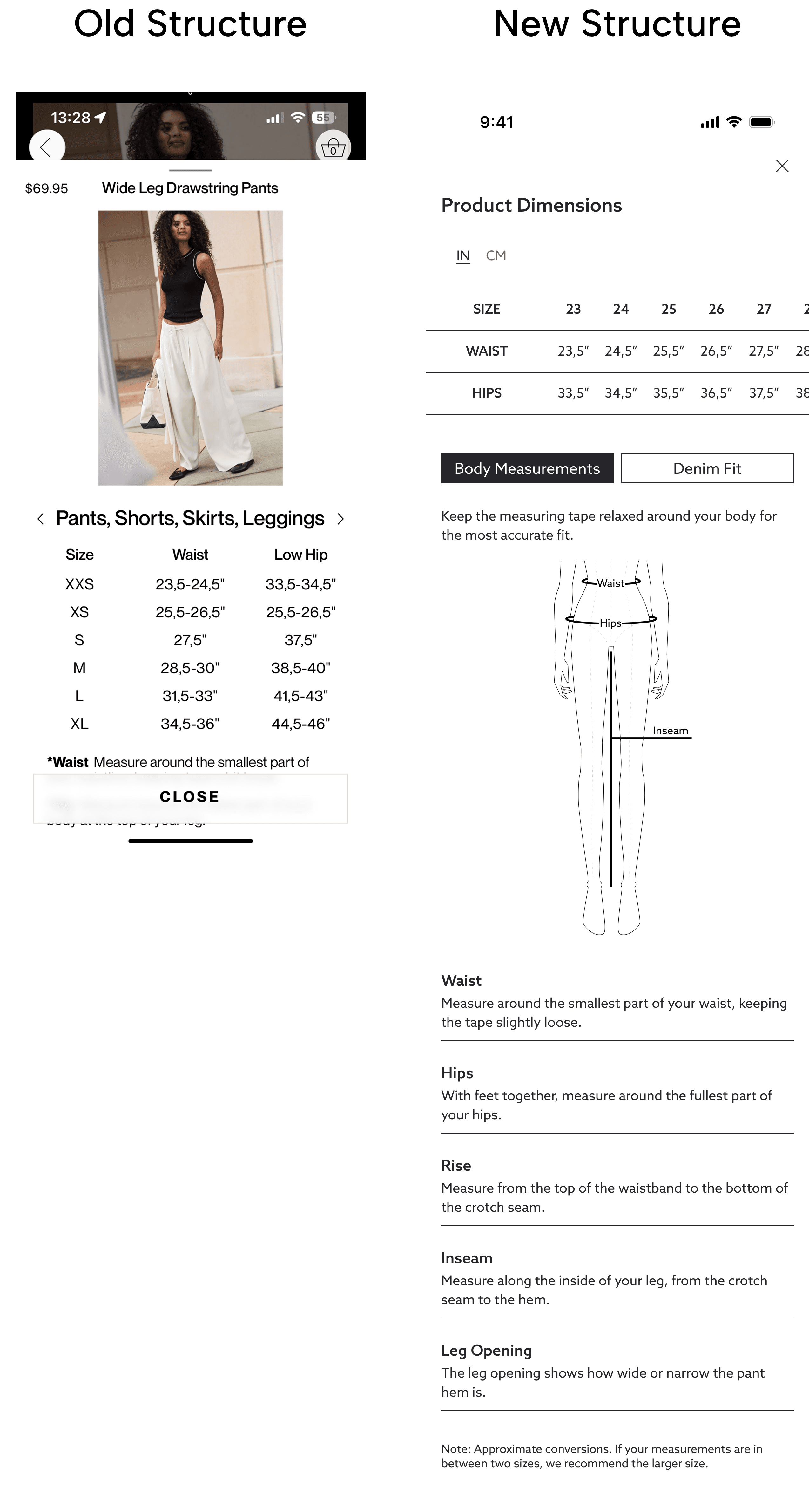
When reviewing the existing size guide, I noticed that customers weren't simply choosing a size—they were first forced to determine which information was relevant to them.
The experience attempted to support every product category within a single interface. Whether a customer was shopping for pants, dresses, or shoes, they were presented with the same extensive set of sizing tables and product types.
As a result, finding the right size became a task of filtering information rather than making a decision.

My first question was:
"Why are we asking customers to search for the right size chart when we already know which product they're viewing?"
Instead of displaying every possible sizing option, I proposed a context-aware experience that automatically surfaces the measurements relevant to the selected product.
This simple shift removes unnecessary decision-making and allows customers to focus on finding the right fit.
Reducing Cognitive Load
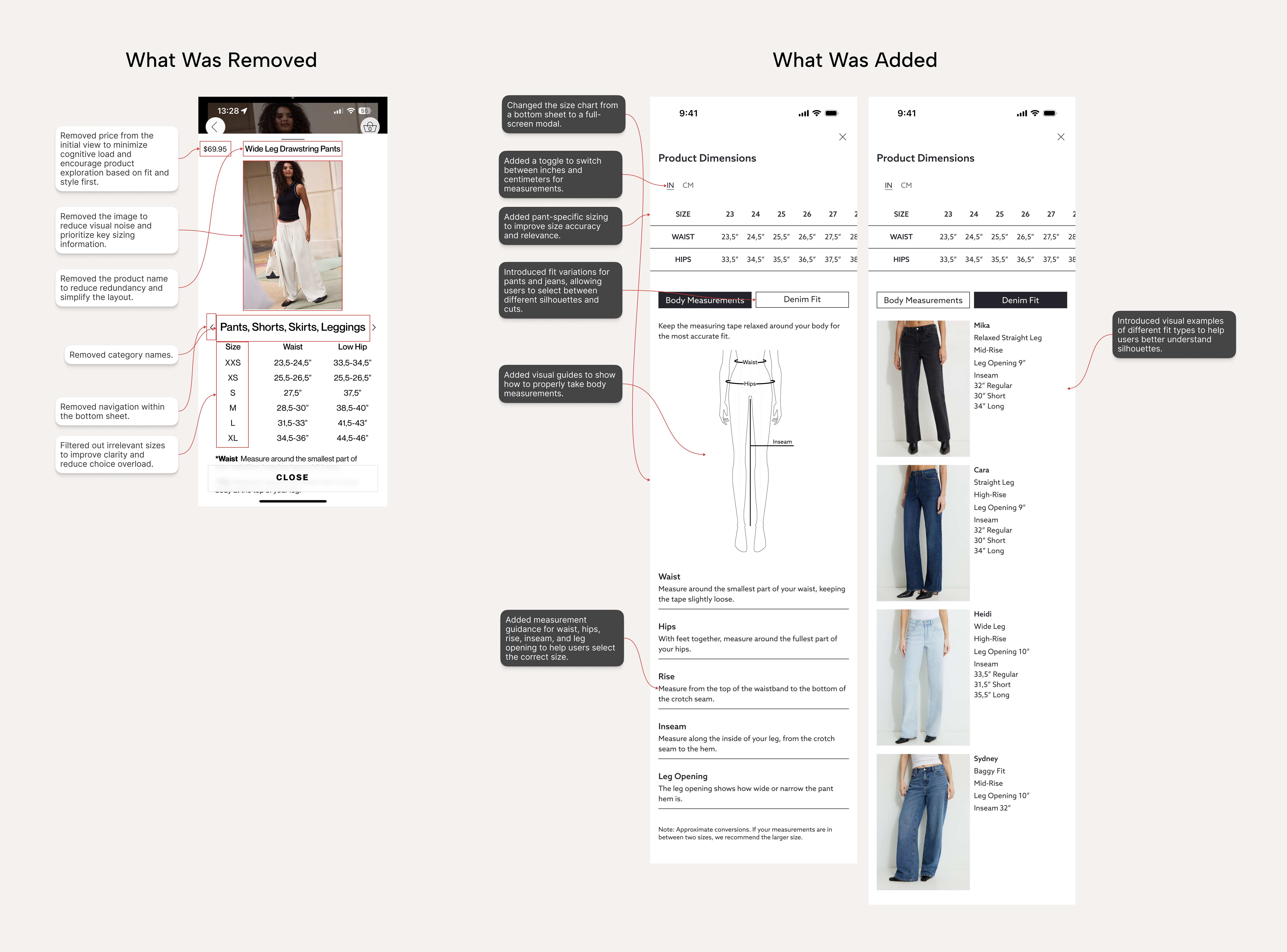
My goal was not to add functionality, but to remove unnecessary complexity.
Designing for Confidence
The size guide should help customers answer a simple question: Will this fit me?
Instead, the existing experience required customers to sort through irrelevant categories, lengthy tables, and repeated content before finding the information they needed. This created friction during a key decision-making moment and increased the risk of ordering the wrong size.
The redesign focuses on relevance and clarity. By automatically surfacing product-specific sizing information and integrating measurement guidance, the experience helps customers find the right fit faster and make more confident purchase decisions.
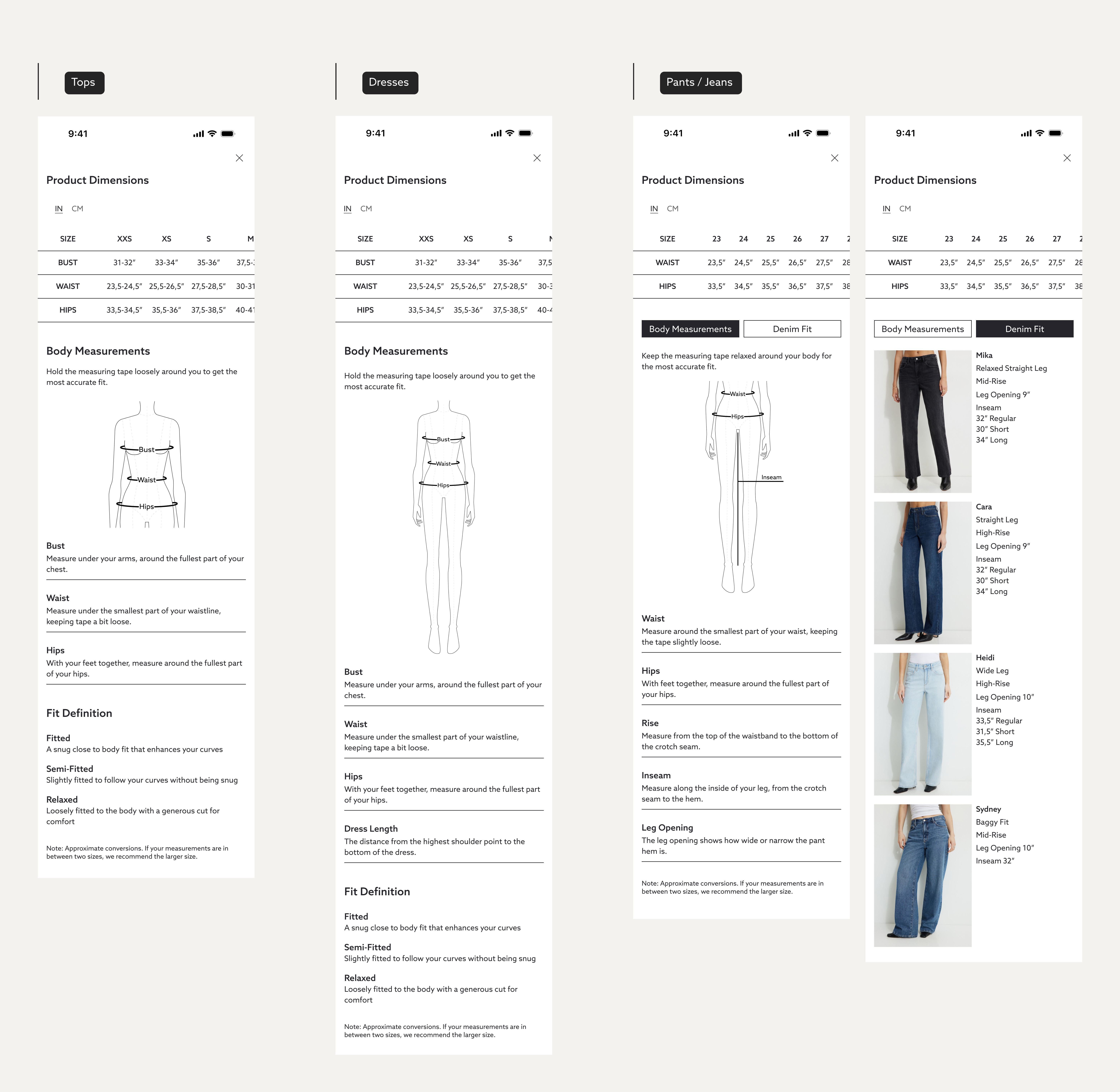
Expected outcomes include a 10–15% reduction in size-related returns, a 20–30% increase in size chart engagement, and faster purchase decisions through improved clarity and guidance. The redesign also establishes a scalable framework that can be consistently applied across apparel, footwear, and future product categories, reducing maintenance effort while creating a more cohesive customer experience.


